Tejhaksh Technologies is the Website designing & Digital Marketing company based in Neemuch, established in 2020 providing Website design, Website development, Logo design, Domain Registration, Web hosting, Android App Development, eCommerce web development, Search Engine Optimization, Bulk SMS etc. We have good experience in developing different platform websites and we keep our eye on the latest technologies to implement on the website for better conversion and user experience.
Organic traffic is the most sustainable and scalable growth engine for any website. Unlike paid advertising—which stops generating results the moment you pause your budget—organic traffic continues to grow over time. It builds compounding visibility, long-term authority, brand trust, and predictable revenue without ongoing ad spend.
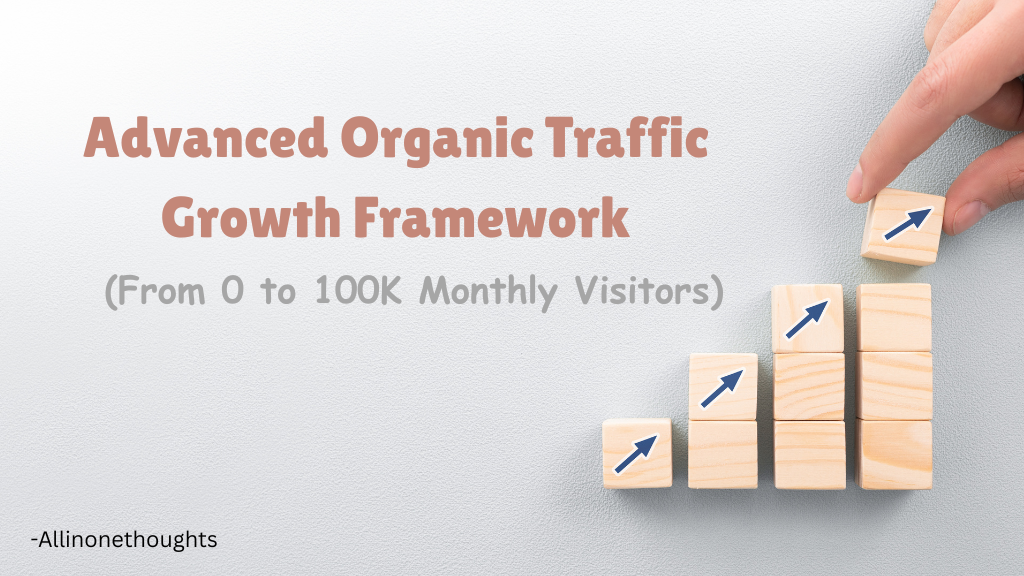
In this comprehensive guide, you’ll discover a proven, advanced framework to scale from 0 to 100,000 monthly organic visitors. We’ll break down strategic SEO frameworks, topical authority development, technical optimization, and scalable content systems that transform your website into a predictable, high-performing organic traffic engine.
Organic traffic refers to visitors who come to your website through unpaid search engine results. They discover your content organically by searching for relevant keywords, questions, or solutions — without paid advertisements.
These users usually have high intent, making them more likely to engage and convert.
Why It Matters
High-intent audience
Long-term, compounding growth
Stronger authority and trust
Better conversions
Lower acquisition cost over time
Now, let’s explore the advanced framework to grow from 0 to 100K monthly organic visitors.
The first phase of organic growth is all about building a strong, strategic foundation. At this stage, your goal is not rapid traffic spikes — it’s clarity, structure, and authority positioning. A weak foundation leads to slow growth and unstable rankings. A strong one creates compounding results.
One of the most common mistakes beginners make is choosing a niche that is too broad and highly competitive.
For example, instead of targeting a wide topic like “Digital Marketing,” narrow it down to a focused segment such as:
This focused approach allows you to dominate a micro-topic rather than compete with established authority websites in broad categories.
Your primary objective in this stage is to build topical authority — becoming deeply relevant in one specific area before expanding into related subtopics.
Search engines prioritize websites that demonstrate:
When your website consistently publishes high-quality content around one focused theme, it becomes easier to rank and build trust.
Traditional keyword research is no longer enough. Modern SEO requires understanding why users are searching.
Every keyword falls into one of four primary search intent categories:
To build a scalable organic strategy, focus on:
Instead of creating multiple thin articles targeting similar keywords, build one authoritative, in-depth article that addresses the entire keyword cluster.
This approach improves:
Search engines must clearly understand what your website specializes in. Proper structure is essential for this.
Use the Pillar + Cluster content model:
Pillar Page:
Supporting Cluster Articles:
Each cluster article should internally link back to the pillar page, and the pillar page should link out to the clusters.
This creates:
A well-structured website not only improves SEO performance but also enhances user navigation and engagement.
In Phase 1, your focus is clarity, structure, and depth — not volume. Once this foundation is properly built, scaling to higher traffic levels becomes significantly easier and more predictable.
Once your foundation is in place and you begin generating consistent traffic, the next objective is to build authority and trust. At this stage, growth depends less on publishing quantity and more on improving content quality, depth, and credibility.
This is where you transition from being “just another website” to becoming a trusted resource in your niche.
Content length alone doesn’t drive rankings — depth, clarity, and user satisfaction do.
A high-performing article should include:
Focus on solving the user’s problem better than competitors.
If your content fully satisfies search intent and delivers real value, rankings and authority will follow.
At this stage of growth, publishing great content is not enough — every article must be strategically optimized to maximize visibility, relevance, and click-through rate.
On-page SEO ensures that search engines clearly understand your content while also making it compelling for users to click and engage.
Each article should go through a structured optimization process before publication.
On-Page SEO Checklist:
Compelling SEO Title
Use numbers, power words, and clarity. Your title should be both keyword-focused and click-worthy.
Optimized Meta Description
Write a persuasive summary that improves CTR while naturally including the primary keyword.
Proper Heading Structure (H1–H3)
Maintain a logical hierarchy that improves readability and semantic clarity.
Strategic Internal Linking
Link to relevant cluster and pillar pages to strengthen topical authority and improve crawl flow.
External Authority Links
Reference credible, relevant sources to enhance trust and contextual relevance.
Image Optimization
Use descriptive file names and keyword-rich alt text for better image search visibility.
Schema Markup Implementation
Add structured data (FAQ, Article, How-To, etc.) to improve rich result eligibility.
Beyond these basics, entity optimization plays a crucial role in modern SEO. Including semantically related terms, concepts, and context helps search engines better understand the depth and relevance of your content.
Effective on-page SEO transforms a good article into a high-ranking, high-performing asset.
Technical SEO is the backbone of scalable organic growth. Without a strong technical foundation, even high-quality content may struggle to rank or maintain stability.
To support long-term growth, ensure your website meets the following standards:
Regular technical audits are essential to identify issues early and maintain optimal site performance. A technically sound website allows your SEO efforts to scale smoothly and sustainably.
Backlinks remain one of the strongest ranking signals in SEO. However, modern link building is no longer about volume — it’s about authority, relevance, and trust.
To build a powerful backlink profile, focus on strategic and sustainable methods:
Remember, one high-quality backlink from a relevant authority site is far more valuable than dozens of low-quality links.
Prioritize quality, relevance, and long-term credibility over sheer numbers.
Also read this:
Organic vs Paid Social Media Marketing: A Complete Comparison Guide
What are HTTP Status Codes? Types, Meaning & Their Impact on Website SEO
What Is the ROI of SEO? How to Calculate SEO ROI with Formulas, Metrics and Strategies
What is Dwell Time in SEO? Meaning, Importance, and How to Improve It
As your website grows, consistency becomes the driving force behind sustainable traffic expansion. Random publishing will no longer produce meaningful results — you need a structured, repeatable system.
Develop a clear content scaling framework that includes:
Instead of publishing sporadically, build a predictable and data-driven publishing workflow. A systematic approach ensures steady growth, better resource management, and long-term scalability.
Ranking on the first page is only half the battle — visibility means nothing without clicks. To maximize traffic, you must optimize for a higher click-through rate (CTR).
Enhance your search listings by improving:
A higher CTR signals relevance to search engines, which can further improve rankings and overall organic performance.
Internal linking helps distribute authority and clarify content relationships across your site.
Best practices:
Strong internal linking improves crawlability, topical authority, and ranking stability.
Now you’ve entered the authority stage, where growth becomes more strategic than tactical.
Over time, older articles may lose rankings. Instead of only creating new content, optimize existing pages.
To recover traffic:
Refreshing content is often faster and more effective than publishing new posts.
For large-scale organic growth, implement programmatic SEO — a system that uses structured templates to create scalable, data-driven pages efficiently.
Instead of manually creating every page, you build a repeatable framework powered by structured data.
Common examples include:
When executed properly, programmatic SEO allows you to target hundreds or thousands of long-tail variations at scale.
However, this strategy performs best when supported by strong domain authority, high-quality data, and strict quality control to avoid thin or duplicate content.
Traffic alone does not equal growth — revenue does. Without a clear conversion strategy, even high organic traffic has limited business impact.
To maximize results, focus on turning visitors into leads and customers.
Key areas to optimize:
The goal is simple: convert organic visitors into subscribers, leads, and paying customers. Sustainable growth happens when traffic and revenue scale together.
Sustainable growth requires consistent performance monitoring. Track key metrics monthly to identify opportunities and fix weaknesses early.
Focus on:
Make data-driven decisions — optimize based on insights, not assumptions.
Avoid these errors:
Long-term growth requires consistency and strategic execution.
Organic growth takes time and strategic consistency. Here’s a practical roadmap:
Organic traffic compounds over time — patience and consistent execution are essential for long-term success.
Right niche + Intent-based keywords + Deep content + Technical SEO + Quality backlinks + Continuous updates = Scalable organic traffic system.
If executed consistently, reaching 100,000 monthly organic visitors is achievable.
Organic traffic is a long-term digital asset, not an overnight strategy.
With the right framework, consistent execution, and ongoing optimization, you can build a scalable traffic engine.
Start strong, build authority, scale strategically, and focus on conversions — that’s how you grow from 0 to 100K monthly visitors.
Leave a Comment