
- November 12, 2026
- Tejhaksh
- 0 Comments
- Digital Marketing, Uncategorized
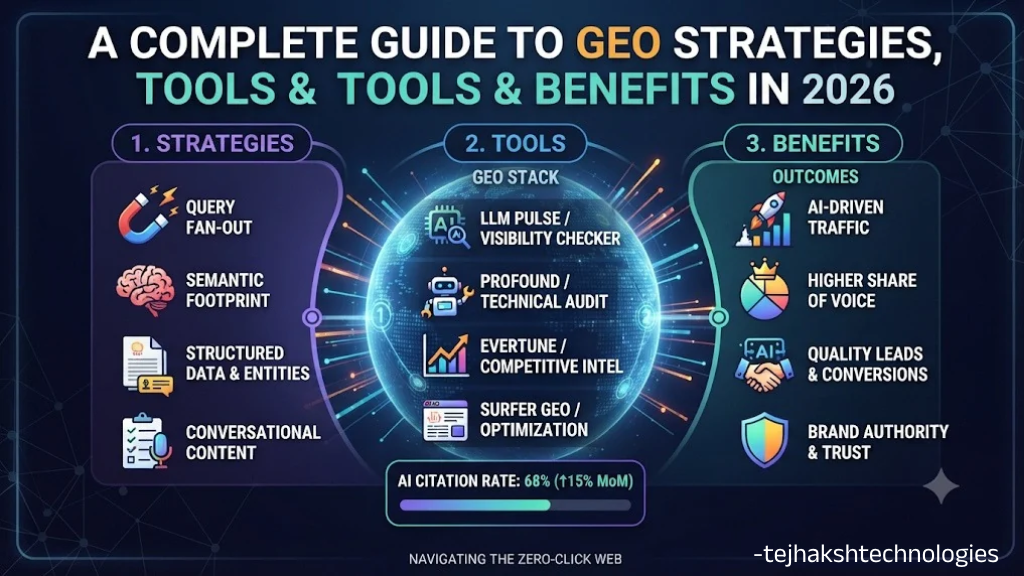
What Is Generative Engine Optimization? A Complete Guide to GEO Strategies, Tools & Benefits in 2026
Introduction
AI is transforming the way people find and consume information online. Platforms like ChatGPT, Gemini, Perplexity, and Google’s AI-powered search are making it easier to discover answers without visiting multiple websites.
As search behaviour changes, Generative Engine Optimization (GEO) is emerging as a new approach to digital visibility. It focuses on making your website content relevant, reliable, and easier for AI-powered platforms to understand and reference.
For businesses, this means looking beyond traditional Google rankings and adapting to the future of search.
Let’s explore how GEO works, its key GEO strategies, useful tools, benefits, and why it matters for businesses and B2B brands in 2026.
What Is Generative Engine Optimization (GEO)?
Generative Engine Optimization (GEO) is a modern digital marketing approach designed to help websites and brands gain visibility across AI-powered search platforms. It involves creating clear, relevant, and credible content that AI systems can understand and potentially reference when generating answers.
For example, when someone asks ChatGPT, “Which digital marketing agency is best for a small business?” the platform may generate recommendations using information from various online sources. Businesses with useful content and a strong online presence may have a greater opportunity to be featured.
GEO is becoming relevant across several AI-powered platforms, including:
- ChatGPT: Delivers conversational answers and web-based research.
- Google AI Overviews: Presents AI-generated summaries in Google Search.
- Google AI Mode: Provides conversational and AI-powered search experiences.
- Perplexity: Generates answers supported by website references.
- Microsoft Copilot: Helps users find and understand online information.
- Google Gemini: Offers AI-powered assistance and information discovery.
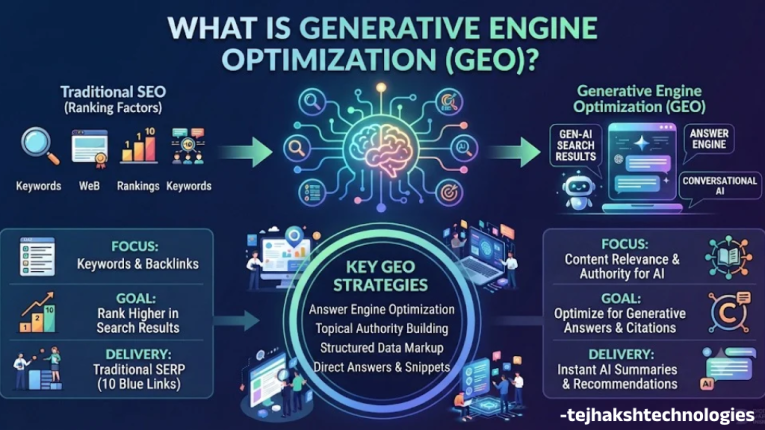
Unlike traditional SEO, which primarily aims to improve visibility in search engine results, GEO focuses on making your brand and website more discoverable within AI-generated answers.
The goal is to build a credible digital presence so that AI-powered platforms can discover, understand, and potentially reference your content when responding to relevant user queries.
How Does GEO Work?
Generative AI search systems can retrieve information from online sources, interpret the context, and combine relevant information to generate answers.
A simplified GEO process looks like this:
- Content Discovery: AI-powered search systems discover publicly accessible website content.
- Content Understanding: Systems interpret the topic, context, entities, and relationships within the content.
- Information Evaluation: Relevant information is assessed using signals such as relevance, reliability, and source quality.
- Answer Generation: The AI system generates a response using information available to it.
- Source Attribution: Depending on the platform and response, relevant websites may receive citations, mentions, or clickable links.
The exact process differs between platforms. Not every AI response uses the same sources, and no GEO strategy can guarantee that a website will be mentioned.
What Is Generative Engine Optimization Used For?
Generative Engine Optimization (SEO) helps businesses adapt to changing search habits by making their online information more accessible and relevant to AI-powered platforms. It allows brands to reach audiences who use AI tools to explore solutions, evaluate products, and make informed decisions.
Here are five key ways businesses can benefit from GEO.
1. Expanding Brand Visibility
GEO creates opportunities for businesses to get discovered through AI-generated recommendations and answers. For instance, someone looking for a reliable website development company in India may discover brands whose websites provide relevant service details, useful information, and genuine customer experiences.
2. Establishing Industry Expertise
Consistently publishing valuable blogs, expert insights, industry updates, and original research helps position your business as a knowledgeable industry resource. Mentions from relevant and reputable websites can further strengthen your brand’s online reputation.
3. Attracting Potential Customers
Many users turn to AI platforms before choosing a product or service. They ask detailed questions to understand their options.
Examples include:
Which digital marketing agency is suitable for startups?
What should a business website cost?
Which CRM platform is right for a small company?
What are the best ways to increase online leads?
By addressing these questions through informative content, businesses can connect with potential customers during their decision-making journey.
4. Making Products and Services Easier to Discover
GEO helps online stores, SaaS businesses, and service providers present their offerings more clearly. Detailed product descriptions, service information, pricing, specifications, and comparison articles help users understand what a business offers.
5. Strengthening Customer Confidence
A strong online reputation plays an important role in purchasing decisions. Businesses can build confidence by sharing authentic customer feedback, demonstrating practical experience, publishing accurate information, and maintaining consistent brand details across relevant online platforms.
Ultimately, GEO helps businesses create a stronger digital presence while improving their opportunities to reach the right audience through AI-powered search experiences.
Generative Engine Optimization Best Practices
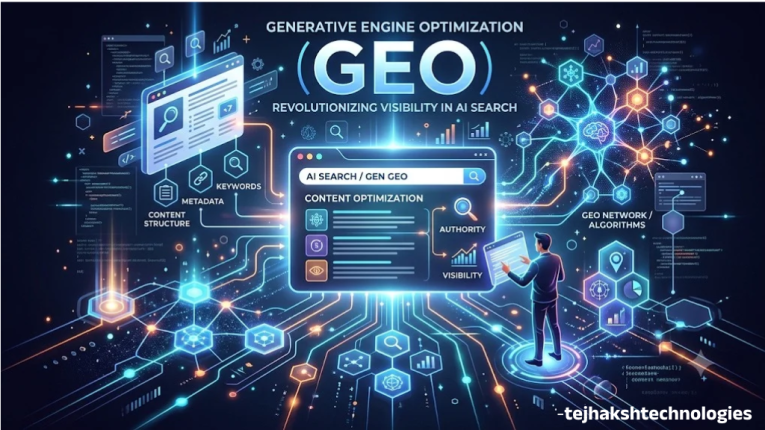
To improve your website’s presence in AI-powered search, simply adding keywords is not enough. You need a combination of valuable content, technical optimization, brand credibility, and a better user experience.
Here are 10 practical GEO best practices to follow:
1. Publish Valuable and Original Content
Create content that addresses real audience needs. Focus on practical solutions, industry insights, detailed guides, and useful examples rather than repetitive keyword-based articles.
2. Focus on Search Intent and Questions
Understand what your audience wants to know. Include relevant questions and provide clear, direct answers before expanding on the topic.
3. Organize Content with Clear Headings
Use a logical heading structure (H1, H2, H3) to divide information into meaningful sections. This improves readability and helps search systems understand your content.
4. Include Original Data and Expert Insights
Make your articles more informative with genuine statistics, research, case studies, expert opinions, and real business examples. Always support factual claims with reliable sources.
5. Earn Relevant Backlinks and Brand Mentions
Build your reputation through quality backlinks, industry publications, guest articles, digital PR, and authentic brand mentions. Prioritize relevance and credibility over link quantity.
6. Maintain Strong Technical SEO
Ensure your website is accessible to search crawlers. Maintain an XML sitemap, configure robots.txt correctly, fix broken links, use HTTPS, improve loading speed, and resolve indexing issues.
7. Implement Relevant Schema Markup
Use suitable structured data, such as Organization, Article, Product, LocalBusiness, and BreadcrumbList schema. Ensure the markup accurately reflects the information displayed on your website. Schema does not guarantee AI citations.
8. Regularly Refresh Website Content
Review older articles and update outdated facts, examples, pricing, and industry information. Keep important pages accurate and relevant.
9. Build a Consistent Brand Identity
Maintain accurate business details, service descriptions, and company information across your website and trusted third-party platforms. Encourage genuine customer reviews and feedback.
10. Track AI Search Visibility
Evaluate your GEO efforts by monitoring:
- Brand mentions in AI-generated answers.
- Website citations and references.
- AI referral traffic.
- Organic search performance.
- Relevant leads and conversions.
- Overall brand visibility.
Analyze these indicators regularly and improve your content strategy based on actual results.
Pro Tip: Focus on creating genuinely useful content and building brand trust. Strong SEO fundamentals combined with high-quality information provide a better foundation for long-term GEO success.
Pros and Cons of Generative Engine Optimization
Generative Engine Optimization offers new opportunities to improve online visibility, but it also comes with certain challenges. Before adopting GEO, businesses should understand its potential benefits and limitations.
Advantages of GEO
1. More Opportunities for AI Visibility
GEO helps businesses improve their chances of being featured in AI-generated answers when users search for relevant information, products, or services.
2. Greater Brand Recognition
Being mentioned by AI-powered platforms can introduce your business to new audiences and increase brand awareness.
3. Stronger Online Reputation
Publishing expert insights, original research, and reliable information helps establish your business as a credible source within your industry.
4. Connects with Potential Customers
Question-focused content allows businesses to reach users who are actively researching products, comparing services, or looking for solutions.
5. Complements Existing SEO Strategies
GEO works alongside traditional SEO, content marketing, and digital PR to create a broader online visibility strategy.
6. Opportunities for Small Businesses
Smaller brands can compete in specialized niches by sharing unique knowledge, practical experience, and detailed industry information.
Disadvantages of GEO
1. No Assurance of AI Recommendations
Even well-optimized websites may not appear in AI-generated responses. Inclusion depends on the platform and the relevance of available information.
2. Complex Performance Tracking
AI visibility is not as straightforward to measure as traditional keyword rankings. Results can vary across platforms, queries, and users.
3. Ongoing Optimization Is Necessary
Businesses must continuously improve their content, verify information, and maintain their online presence to stay relevant.
4. Frequent Changes in AI Technology
AI platforms regularly update their systems and search experiences, making it necessary for marketers to adapt their strategies.
5. Additional Marketing Costs
Effective GEO may require investment in content development, technical improvements, research, digital PR, and specialized monitoring tools.
6. Potential Loss of Website Traffic
AI-generated answers sometimes provide enough information to satisfy users without a website visit. This may reduce clicks even when a brand receives visibility.
Overall, GEO can be a valuable addition to digital marketing, but it should be approached with realistic expectations. Combining GEO with traditional SEO and a strong content strategy is a more balanced approach.
Generative Engine Optimization Tools
GEO tools help marketers research relevant topics, analyze competitors, track brand visibility, and create content for AI-powered search platforms. While no tool can guarantee AI recommendations, these platforms can support an effective GEO strategy.
- Google Search Console: Monitor website indexing, clicks, impressions, search performance, and technical issues.
- Semrush: Research keywords, analyze competitors, review backlinks, and optimize website content.
- Ahrefs: Discover content opportunities, explore backlinks, and understand competitor search strategies.
- Perplexity: Research industry topics, explore trusted sources, and review how AI-generated answers present information.
- Google Analytics 4: Measure website traffic, user engagement, referral sources, and conversions.
- Bing Webmaster Tools: Check website indexing, crawling activity, search performance, and technical health.
- Profound: Monitor brand presence and visibility across AI search platforms.
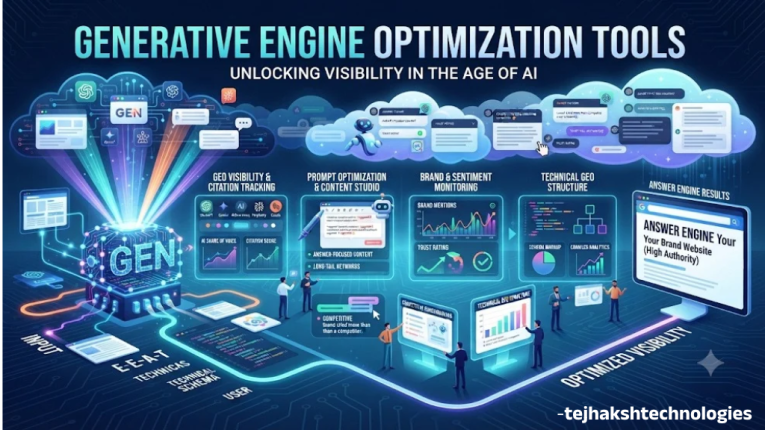
How to Choose the Right GEO Tools?
Choosing Generative Engine Optimization tools depends on your business size, marketing goals, and available budget. You don’t need an expensive toolkit to get started.
- For Small Businesses: Start with free tools like Google Search Console, Bing Webmaster Tools, and Google Analytics 4. Combine them with manual research on AI platforms to understand how your brand and content appear.
- For Marketing Agencies and Large Businesses: Consider specialized GEO platforms that offer AI visibility tracking, brand mention monitoring, competitor analysis, and citation insights across multiple AI search platforms.
Important Note: GEO tools provide estimates and useful insights, not guaranteed results. AI platforms control their own answer-generation systems, so tool data should be treated as guidance rather than a promise of visibility.
Why Is GEO Important in 2026?
The way people discover information online is evolving. Instead of relying only on traditional search results, users are increasingly turning to AI-powered platforms for recommendations, product comparisons, business research, and quick answers.
This change makes Generative Engine Optimization an important part of a modern digital marketing strategy.
Here are five reasons why businesses should pay attention to GEO in 2026.
1. People are Searching Differently
Users now ask detailed, conversational questions rather than entering short keywords. Businesses need content that directly answers these specific queries and provides useful information.
2. AI Platforms Offer New Brand Discovery Channels
AI-powered search can introduce businesses through generated responses, recommendations, and source links. GEO helps brands improve their chances of being discovered through these experiences.
3. Online Brand Reputation Matters
AI platforms may use information from different online sources when generating responses. Consistent business details, credible mentions, customer reviews, and a positive digital reputation can strengthen brand trust.
4. Helpful Content Builds Greater Value
Simply publishing keyword-focused articles is no longer enough. Businesses should create original, well-researched content with practical examples, expert insights, and accurate information.
5. SEO and GEO Work Better Together
GEO should complement traditional SEO rather than replace it. Combining technical SEO, quality content, digital PR, and brand building creates a broader approach to online visibility.
Google’s AI search guidance in 2026: Google’s published guidance for AI-powered search experiences reinforces the importance of unique, helpful content and strong technical SEO fundamentals. Businesses should focus on creating value for users instead of relying on special optimization tricks.
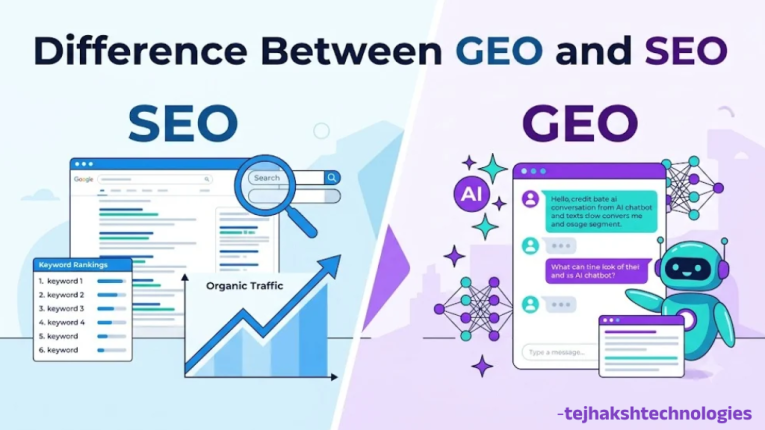
Difference Between GEO and SEO
SEO and GEO both aim to improve a brand’s online visibility, but they work across different search experiences. SEO focuses on helping websites appear in traditional search results, whereas GEO aims to make brand information useful and discoverable in AI-generated responses.
Key Differences Between GEO and SEO
Primary Goal
- SEO: Improve website rankings and visibility in search engine results.
- GEO: Increase opportunities for a brand or website to appear in AI-generated answers.
Main Platforms
- SEO: Google Search, Bing, and other search engines.
- GEO: ChatGPT, Google AI Overviews, Gemini, Perplexity, and Microsoft Copilot.
Content Strategy
- SEO: Focuses on search intent, relevant keywords, quality content, and internal linking.
- GEO: Emphasizes clear answers, useful context, original insights, and trustworthy information.
Visibility Indicators
- SEO: Rankings, organic clicks, impressions, and website traffic.
- GEO: Brand mentions, AI-generated citations, source references, and AI referral traffic.
Building Authority
- SEO: Relies on quality backlinks, relevant content, and website reputation.
- GEO: Benefits from credible information, expert contributions, trusted sources, and consistent brand mentions.
Content Presentation
- SEO: Uses organized headings, relevant keywords, metadata, and helpful page structure.
- GEO: Uses direct explanations, descriptive headings, relevant examples, and well-organized information.
Performance Measurement
- SEO: Uses tools such as Google Search Console, GA4, and rank-tracking platforms.
- GEO: Uses AI visibility tools, brand mention tracking, citation analysis, and referral traffic reports.
Which Strategy Should Businesses Choose?
Businesses don’t need to choose between SEO and GEO. A combined approach can support visibility in both traditional search engines and AI-powered discovery platforms. Strong SEO fundamentals, valuable content, and brand credibility provide a useful foundation for both.
How to Build an Effective GEO Strategy for Your Business
A successful GEO strategy starts with understanding your audience and creating useful content that AI-powered platforms can easily understand. Follow these eight steps to get started.
Step 1: Understand Your Customers
Identify your target audience, their needs, common problems, and the questions they ask before choosing a product or service.
Step 2: Find Topics Your Audience Searches For
Use keyword research, customer queries, competitor websites, and AI tools to discover relevant topics for your business.
Step 3: Publish Useful and Informative Content
Create helpful blogs, service pages, FAQs, guides, and product comparisons that answer real customer questions.
Step 4: Make Your Website Easy to Understand
Use clear headings, simple URLs, relevant internal links, and suitable schema markup to organize your website content.
Step 5: Improve Your Brand Reputation
Build credibility through genuine customer reviews, industry publications, business partnerships, digital PR, and original research.
Step 6: Strengthen Website Performance
Improve page loading speed, mobile experience, website security, and indexing so search engines can access your important pages.
Step 7: Check Your AI Search Presence
Search for relevant business-related questions on AI platforms. Observe whether your brand is mentioned or your website is used as a source.
Step 8: Review and Update Regularly
Refresh outdated articles, add useful information, identify missing topics, and monitor your competitors to improve your strategy.
Conclusion: Is GEO Worth Investing in 2026?
Generative Engine Optimization is becoming an important part of digital marketing as more people use AI tools to search for information, compare products, and find businesses.
For companies, GEO offers another opportunity to improve online visibility and reach potential customers through AI-powered search.
However, GEO does not replace traditional SEO. Businesses should combine quality content, technical SEO, brand building, and AI search optimization for a stronger online presence.
Whether you run a small business, SaaS company, e-commerce store, or B2B organization, investing in helpful and trustworthy content can prepare your brand for changing search habits.
Remember: Don’t create content just to rank. Create content that answers real questions and genuinely helps your audience.
Leave a Comment