Tejhaksh Technologies is the Website designing & Digital Marketing company based in Neemuch, established in 2020 providing Website design, Website development, Logo design, Domain Registration, Web hosting, Android App Development, eCommerce web development, Search Engine Optimization, Bulk SMS etc. We have good experience in developing different platform websites and we keep our eye on the latest technologies to implement on the website for better conversion and user experience.
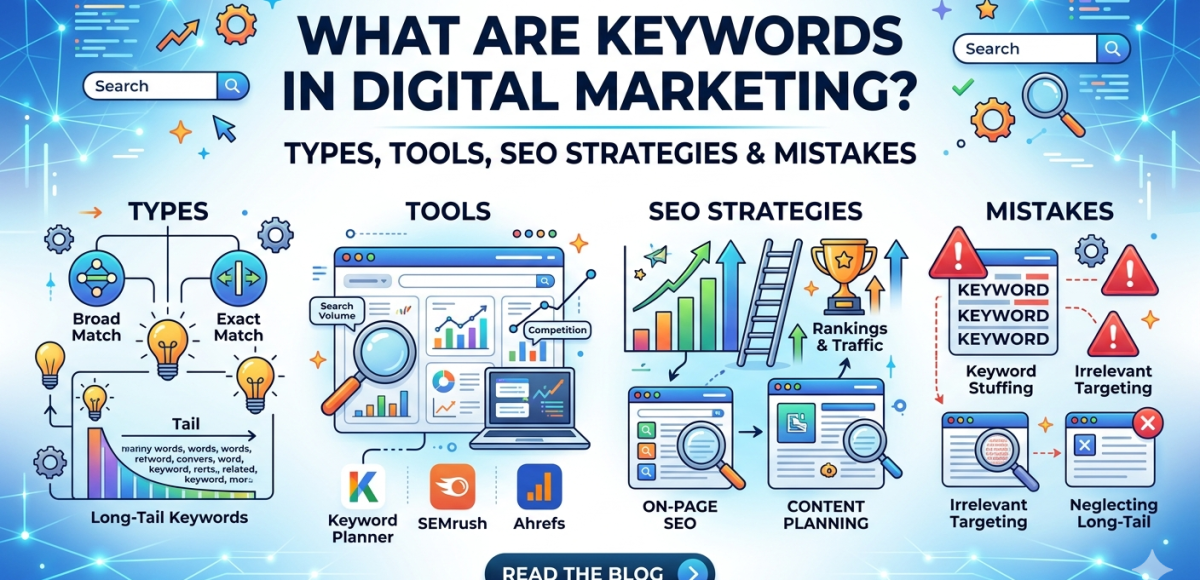
In today’s digital landscape, digital marketing and SEO (Search Engine Optimization) have become integral components of online success. If you wish to achieve higher rankings for your website, blog, business, or YouTube channel on search engines like Google, understanding “Keywords” is absolutely essential.
Whenever someone searches the internet for information, a product, or a service, they type specific words or phrases into a search engine. These words are known as keywords. Keywords help search engines understand what a user is looking for and determine which content is most relevant to display to them.
In the realms of SEO and digital marketing, utilizing the right keywords drives organic traffic to a website, enables you to reach the right audience, and significantly enhances online visibility. This is precisely why Keyword Research and Keyword Optimization are considered the bedrock of any successful SEO strategy.
In this easy-to-follow guide—designed specifically for beginners—you will learn:
What keywords in digital marketing
Why keywords are crucial for SEO
The different types of keywords
What Keyword Research entails
The best Keyword Research tools
How to identify the right keywords
How to effectively incorporate keywords into your content
Tips for Keyword Optimization
And how to avoid common mistakes in SEO.
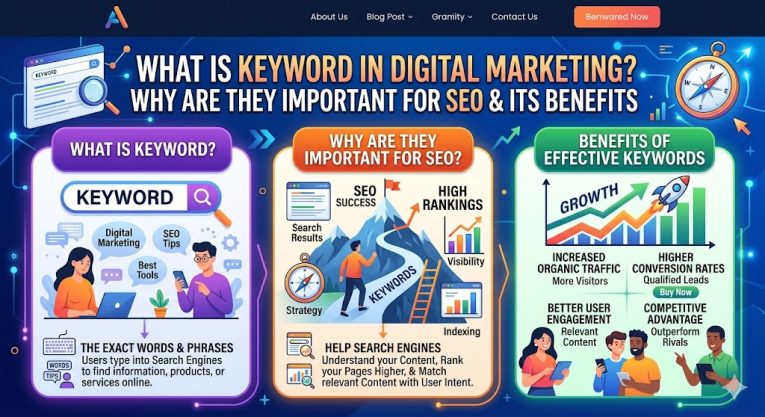
A keyword is a word or phrase that people type into search engines to find specific information, products, services, or solutions on the internet. Keywords are crucial in digital marketing and SEO, as they help search engines understand the subject matter of your content.
For example, if someone searches on Google for:
then all of these are referred to as SEO keywords.
Simply put, keywords act as a bridge connecting the user with your content. When you incorporate the right and relevant keywords into your blog, website, or videos, search engines are able to help deliver your content to the right audience.
This is precisely why selecting the right keywords is considered one of the most critical strategies in SEO and digital marketing.
SEO (Search Engine Optimization) is a process designed to help a website achieve a higher ranking on search engines such as Google. Keywords play a pivotal role in this process, as they assist search engines in understanding the specific subject matter of your content.
When you use relevant and targeted keywords in your blog, website, or videos, search engines can better understand your content and show it to users who are actively searching for that topic.
Conversely, if your content lacks the appropriate keywords, your website will fail to reach its intended audience, and ranking within search results may prove to be a difficult challenge.
Therefore, proper keyword research and keyword optimization are considered absolutely essential for the success of any SEO strategy.
1. Helps Improve Search Engine Rankings
Using the right and relevant keywords enables your website or blog to rank higher on search engines like Google. This increases the online reach and visibility of your content.
2. Aids in Boosting Organic Traffic
Targeted keywords drive users to your website who are actively searching for your products, services, or specific information. This leads to an increase in organic traffic to the website.
3. Enhances Website Visibility and Brand Awareness
When your content is optimized with the appropriate keywords, your website reaches a wider audience. This strengthens your brand identity and improves your online presence.
4. Facilitates Reaching the Right Audience
Keywords help in understanding the search intent of users. This allows you to deliver your content to the people who are genuinely interested in your information, products, or services.
5. Helps Improve Conversion Rates
Users who search using specific keywords are more likely to purchase a product, avail a service, or complete a desired action. This results in improved conversion rates and contributes to business growth.
Search Intent refers to *why* a user is searching for something—or, in other words, the objective behind their search query.
For example, if someone searches on Google for:
“Best budget laptops for students”
This implies that the user is likely seeking information regarding the following:
If your blog or website utilizes accurate and optimized keywords—such as “Best Budget Laptop for Students”—the likelihood of your content appearing in Google Search Results increases significantly.
This is precisely why understanding Search Intent is crucial; it enables you to create content that directly addresses the user’s specific needs and aligns with their search query.
Keywords constitute the most critical component of any SEO and digital marketing strategy. They assist search engines in understanding the subject matter of your content and determining which audience it should be displayed to.
Utilizing the right keywords offers businesses numerous benefits, such as:
If your content lacks the appropriate keywords, search engines will be unable to accurately interpret your pages. Consequently, this can negatively impact your website’s visibility and rankings.
For this reason, proper keyword research and optimization are considered the foundation of successful SEO and digital marketing.
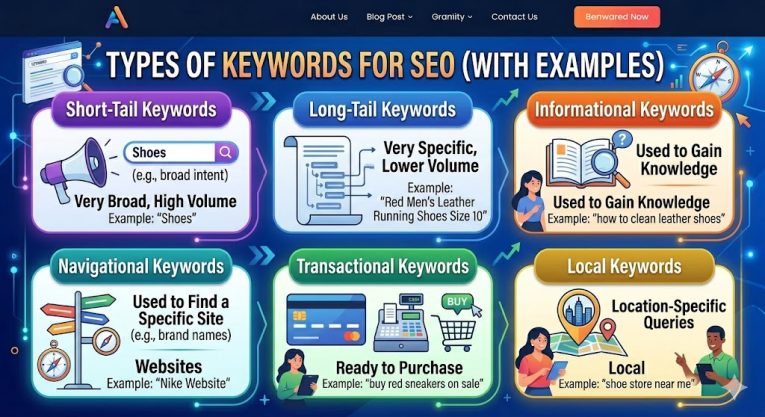
In SEO, understanding the different types of keywords is crucial for achieving better rankings and reaching the right audience. Each keyword serves a distinct purpose.
Short-tail keywords are short and general search terms. They typically have a very high search volume, but the competition associated with them is also quite intense.
Examples:
Advantages:
Disadvantages:
Long-tail keywords are longer and more specific keywords. They target specific information or a particular audience segment.
Examples:
Advantages:
When a user is simply seeking information, they use informational keywords.
Examples:
What is SEO?
How to lose weight
Digital marketing tutorial
These keywords are predominantly used in blogs, guides, and educational content.
Navigational keywords are used when a user is searching for a specific website, brand, or platform.
Examples:
Transactional keywords are those used by a user with the intent to purchase a product or take a specific action.
Examples:
These keywords are known for having excellent conversion rates.
Local keywords are used to target a specific geographic location. They play a vital role in Local SEO.
Examples:
These keywords are highly beneficial for local businesses.
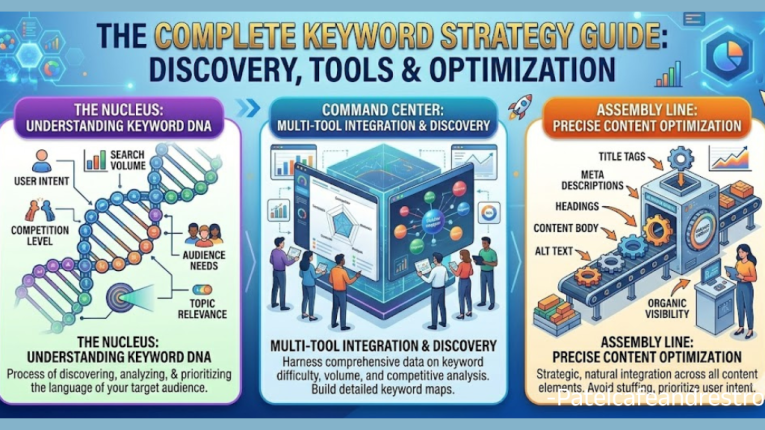
Keyword Research is the process of identifying the words and phrases that people search for most frequently on search engines like Google. Simply put, keyword research helps you understand what information, products, or services people are looking for online.
It is a crucial component of SEO and digital marketing, as selecting the right keywords ensures that your website reaches the right audience.
With the help of effective keyword research, you can create better content, increase website traffic, and achieve higher rankings on Google.
In today’s landscape, numerous SEO tools are available that assist in finding the right and most profitable keywords. These tools provide crucial information regarding metrics such as Keyword Search Volume, Competition, Trends, and SEO Difficulty.
1. Google Keyword Planner
This is a free keyword research tool provided by Google, utilized for both SEO and Google Ads purposes.
Key Features:
These tools provide crucial information regarding metrics such as keyword search volume, competition, trends and SEO
2. Ahrefs
Ahrefs is a highly popular SEO tool used extensively for keyword research and competitor analysis.
Key Features:
3. SEMrush
SEMrush is a powerful digital marketing and SEO platform that significantly aids in website optimization.
Key Features:
4. Ubersuggest
Ubersuggest is considered an easy-to-use and valuable keyword research tool, particularly for beginners.
Key Features:
5. Google Trends
With the help of Google Trends, you can easily identify trending topics and popular search queries.
Key Features:
By utilizing these tools, you can discover the right keywords and make your SEO strategy significantly more effective.
Also read this:
What Is Bounce Rate? Meaning, Formula, and How to Improve It for Better SEO
What is a URL Slug? Why They Matter for SEO and How to Optimize Them
What Is the ROI of SEO? How to Calculate SEO ROI with Formulas, Metrics and Strategies
How to Make Money with Google AdSense? Complete Beginner’s Guide
Choosing the right keywords is one of the most critical processes in SEO. If you select the right keywords, the likelihood of attracting the right audience to your website increases significantly.
First and foremost, understand what your users are searching for.
Pay attention to the following points:
When you have a thorough understanding of your audience, choosing the right keywords becomes much easier.
Brainstorm topics related to your niche or subject area and compile a list of them.
Example:
If your niche is Fitness, potential topics could include:
This process helps you discover new keyword ideas.
Now, utilize SEO tools to find keywords.
Popular Tools:
With the help of these tools, you can gather data regarding search volume, competition levels, and trending keywords.
Select keywords that meet the following criteria:
This increases the probability of your content ranking in search results.
Long-tail keywords are longer and more specific keyword phrases.
Examples:
“Best Running Shoes for Beginners”
“Easy Weight Loss Tips at Home”
These keywords typically face less competition and yield better conversion rates.
Analyze your competitors’ websites and blogs to identify the keywords for which they are currently ranking.
This provides you with fresh keyword ideas and helps you refine your own SEO strategy.
To achieve good results in SEO, it is crucial to use keywords in a correct and natural manner. If you place keywords in the right spots, your content stands a better chance of ranking higher in search engines.
The Most Important Places to Use Keywords:
1. Use Keywords in the Blog Title
Make sure to include your main keyword in the blog title. This helps search engines understand the subject matter of your content.
2. Add Keywords to Headings
Use relevant keywords in your H1, H2, and H3 headings. This optimizes the content more effectively and makes it easier to read.
3. Keep URLs Short and Keyword-Focused
Include essential keywords in your URL and keep it concise and simple.
4. Add Keywords to the Meta Description
Incorporate keywords into your meta description in a natural way. This increases the likelihood of generating clicks in search results.
5. Include the Main Keyword in the First Paragraph
Place your primary keyword at the beginning of your content so that search engines can quickly grasp what your article is about.
6. Optimize Image Alt Text
Use descriptive keywords in the “Alt Text” of your images. This improves image SEO.
7. Use Keywords Naturally Throughout the Content
Incorporate keywords naturally and as needed. Avoid “keyword stuffing”—the practice of repeating keywords excessively—as this can have a negative impact on your SEO.
Keyword Density refers to the frequency with which a specific keyword is used within your content relative to the total word count.
Simply put, it indicates how many times your main keyword appears within an article.
Example:
If a specific keyword is used 10 times in a 1,000-word article, its Keyword Density would be approximately 1%.
Keyword Density =
10
1000
× 100 = 1%
Although there is no fixed or “perfect” percentage for Keyword Density, the excessive use of keywords—known as Keyword Stuffing—can be detrimental to SEO.
Therefore, keywords should always be used naturally so that the content remains easy to read and the user experience is enhanced.
In SEO, simply using keywords is not enough to achieve better rankings; utilizing them correctly is equally essential. Many people make common mistakes during keyword optimization that can negatively impact their SEO performance.
1. Keyword Stuffing
Keyword stuffing refers to repeating a specific keyword excessively—more often than necessary.
Incorrect Example:
“The Best SEO Tool is the Best SEO Tool for SEO Experts.”
Such content reads poorly and may be flagged as spam by search engines. Therefore, always use keywords in a natural manner.
2. Ignoring Search Intent
If you use keywords without understanding the user’s search intent, people will not find your content engaging.
Always create content that aligns with the user’s needs and their specific search query.
3. Targeting Only High-Competition Keywords
For new websites, ranking for keywords with extremely high competition can be challenging.
Therefore, in the beginning, it is better to focus more on low-competition and long-tail keywords.
4. Failing to Update Keywords
SEO trends evolve over time. Older keywords do not always continue to perform well.
Therefore, you should conduct periodic keyword research to identify and utilize new, trending keywords.
5. Using Irrelevant Keywords
Using keywords that are unrelated to your content can be detrimental to your SEO efforts.
This can lead to:
Always select keywords that are relevant to your specific topic and target audience.
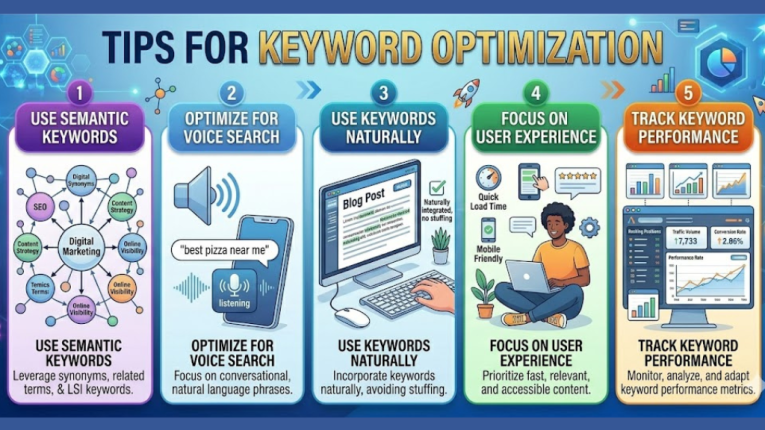
Simply adding keywords is not sufficient for SEO. To achieve better rankings, it is essential to optimize keywords using the right strategy. Listed below are some simple yet effective keyword optimization tips.
1. Use Semantic Keywords
Semantic keywords are related terms that help search engines better understand the subject matter of your content.
Example:
If your main keyword is “Digital Marketing,” related keywords could include:
This makes your content more relevant and SEO-friendly.
2. Optimize for Voice Search
Nowadays, people are increasingly utilizing voice search. Voice search queries tend to be longer and more conversational in nature compared to standard search queries.
Example:
“What are the best SEO tools for beginners?”
Therefore, incorporate natural language and question-based keywords into your content.
3. Use Keywords Naturally
Avoid unnaturally forcing keywords into your text or repeating them excessively.
Always create content that:
Write for users first, and for search engines second.
4. Focus on User Experience
Google doesn’t just look at keywords; it also evaluates how helpful your content is to users.
Therefore:
A positive user experience helps improve your SEO rankings.
5. Track Keyword Performance
It is essential to periodically monitor how well your keywords are performing.
You can track keyword rankings using the following SEO tools:
These tools can help you further refine and enhance your SEO strategy.
Keywords are the most critical component of SEO and Digital Marketing. They help search engines understand your content and ensure your website reaches the right audience.
With the help of proper keyword research and keyword optimization, you can:
Whether you are a blogger, a business owner, a digital marketer, or a content creator—selecting the right keywords and utilizing them effectively is absolutely essential for SEO success.
Always understand user intent, select relevant keywords, and create content that is both natural and helpful. This is the key to a robust SEO strategy and long-term online success.
Leave a Comment