

- May 12, 2026
- Tejhaksh
- 0 Comments
- Branding and Packaging, Digital Marketing, Uncategorized
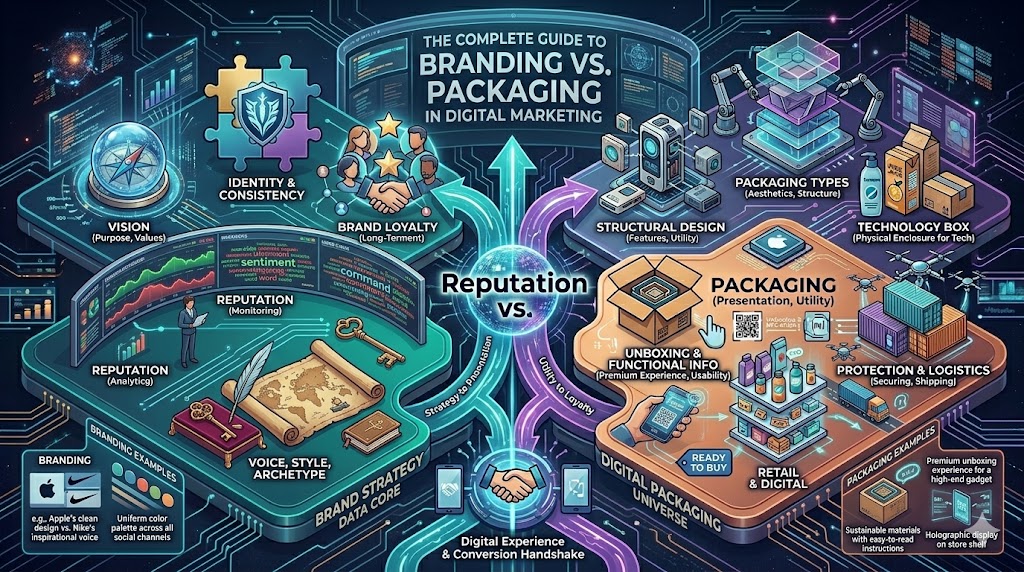
Difference Between Branding and Packaging in Digital Marketing with Examples (Complete Guide)
In today’s digital age, businesses are growing at a much faster pace than ever before. Every day, new brands, products, and online stores are being launched in the market. In this era of increasing competition, simply having a good product is no longer sufficient for success. Any business requires strong branding and attractive packaging to carve out a distinct identity among customers and to attract them. This is precisely why the role of branding and packaging is considered immensely important in digital marketing.
People often mistake branding and packaging for the same thing, whereas both serve distinct objectives and functions. Branding works to establish a company’s identity, image, and emotional connection with customers, while packaging helps present a product in an appealing manner and capture the customers’ attention.
If you are running an online business, an e-commerce store, a startup, or a digital marketing agency, understanding the distinction between branding and packaging is crucial for you. The right strategy can not only boost your sales but also strengthen customer trust and enhance brand value.
In this comprehensive guide, we will explore:
What branding is in the context of digital marketing
What packaging entails
The differences between branding and packaging
Examples of Branding vs. Packaging
Their significance in digital marketing
How branding and packaging work in tandem
The benefits of strong branding and packaging
Common business mistakes and how to avoid them
Let us now delve into the details to understand how branding and packaging play a pivotal role in the success of a business within the realm of digital marketing.
What is Branding?
Branding is the process of creating a distinct and unique identity for a business, company, or product. It is the means through which people recognize, remember, and place their trust in a brand.
Branding is not limited merely to a logo or a company name; it is a blend of all the elements that collectively shape a business’s image in the minds of its customers.
Branding encompasses several key components, such as:
- Brand Name
- Logo Design
- Color Palette
- Brand Messaging
- Website Design
- Social Media Presence
- Customer Experience
- Marketing Strategy
Simply put, branding constitutes a business’s identity—its entire personality.
For instance, when people think of premium smartphones, exquisite design, and cutting-edge technology, the name “Apple” immediately comes to mind. This serves as an excellent example of powerful branding.
Through consistent and effective branding and marketing efforts, the company has successfully cultivated a premium and trustworthy image in the minds of the public.
What is Packaging?
Packaging is the process of packing a product in an attractive manner and presenting it to customers. It is not limited merely to covering or protecting the product; rather, it plays a crucial role in making a positive impression on customers.
When a customer sees a product for the first time, it is the packaging that first captures their attention. Therefore, effective packaging can help boost the sales of any product.
Packaging encompasses various elements, such as:
- The product box
- Labels and design
- Use of colors
- Wrapping style
- Packaging materials
- Product information
- Visual presentation of the product
The primary objective of packaging is to protect the product, make it look appealing, and provide customers with accurate information about it.
For instance, the design of a Coca-Cola bottle is instantly recognizable across the globe. Its unique packaging has become synonymous with the company’s identity.
In today’s era of digital marketing, packaging has become even more significant, as customers shopping online often base their purchasing decisions on the product’s image and its visual presentation.
The Difference Between Branding and Packaging
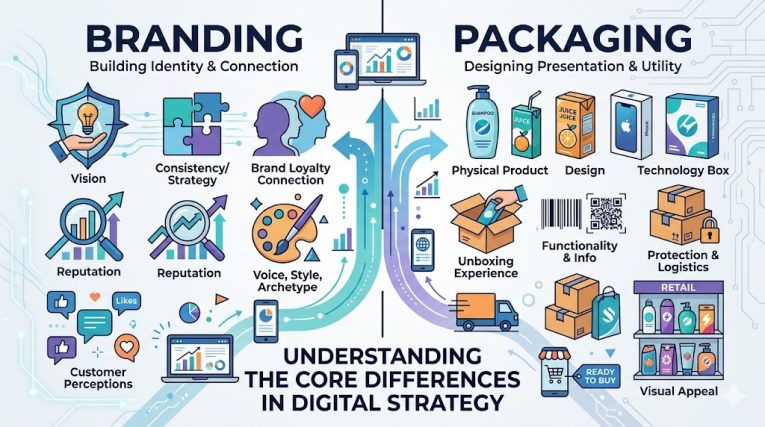
Both branding and packaging are crucial for any business, yet they serve distinct functions and objectives. Simply put, branding establishes a company’s identity, whereas packaging presents the product in an appealing manner.
What Does Branding Do?
The primary objective of branding is to cultivate a strong and trustworthy identity for the company in the minds of the public. It facilitates the establishment of long-term relationships with customers.
Effective branding enables people to easily recognize a company and fosters trust in it.
Examples of Branding:
- The brand’s logo
- The company’s identity
- The brand’s core ideas and values
- Emotional connection with customers
- The brand’s tone of voice and marketing style
What Does Packaging Do?
The primary objective of packaging is to protect the product and present it to customers in an attractive way.
Effective packaging quickly captures a customer’s attention and lends a more professional appearance to the product.
Examples of Packaging:
- Product box design
- Labels and printing
- Use of colors
- Packaging materials
- Visual presentation of the product
To summarize in simple terms:
- Branding establishes the company’s identity in people’s minds.
- Packaging entices people to purchase the product.
The Simple Difference Between Branding and Packaging
To understand the difference between branding and packaging in simple terms:
- Branding establishes a company’s identity and builds trust in the minds of people.
- Packaging captures customers’ attention by making the product look appealing.
Branding works to create an emotional connection with customers, whereas packaging enhances the product’s first impression.
Simply put:
- Branding conveys the company’s story and identity.
- Packaging presents the product in an aesthetically pleasing manner.
Why is Branding Essential in Digital Marketing?
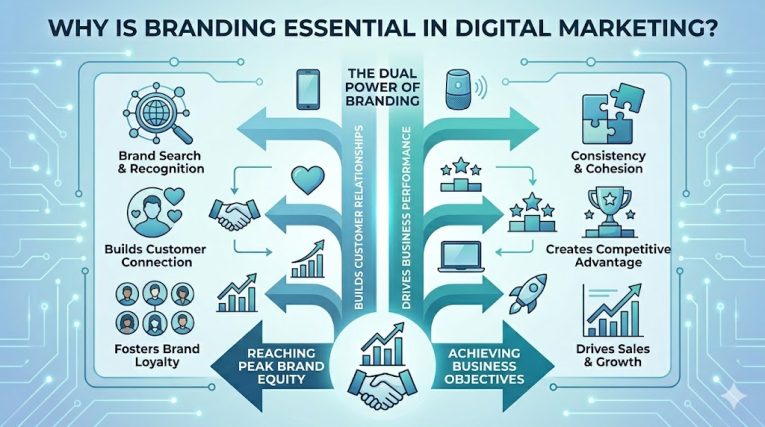
In today’s landscape, digital marketing is characterized by intense competition. Customers on the internet are faced with thousands of available options. In such an environment, strong branding helps any business carve out a distinct identity that sets it apart from the rest.
Effective branding not only captures the attention of customers but also instills a sense of trust and confidence in their minds.
1. Builds Customer Trust
People invariably place greater trust in brands that appear professional and reliable.
When a company possesses:
- An attractive logo
- A well-designed website
- Professional social media profiles
- A consistent brand identity
Customers feel a greater sense of confidence when making purchases from that company.
2. Strengthens Brand Recognition
- Effective branding enables people to easily recognize a company.
- For instance, when people see the “Swoosh” logo, the name Nike immediately comes to mind. This is the power of strong branding.
- This recognition helps foster customer trust and enhances brand loyalty.
3. Creates an Emotional Connection with Customers
- Strong branding establishes an emotional bond with customers.
- People do not merely purchase products; they connect with the brand’s philosophy, quality, and the overall experience it offers.
4. Improves Digital Marketing Results
Effective branding also enhances the overall performance of digital marketing efforts.
It aids in:
- Improving SEO rankings
- Increasing social media engagement
- Generating higher sales through advertisements
- Retaining existing customers
Businesses with strong branding are often more successful in their online marketing endeavors.
Why is Packaging Important in Digital Marketing?
In today’s digital era, packaging is no longer limited merely to protecting a product; it also plays a pivotal role in attracting customers and boosting sales. Good packaging is considered particularly crucial in the realms of e-commerce and online business.
1. Enhances the First Impression
When shopping online, customers first look at the product’s image and its packaging. Attractive packaging creates a positive initial impression on customers and makes the product appear more professional.
2. Makes the Product More Appealing
Beautiful and creative packaging makes a product appear more premium and trustworthy. This quickly attracts customers to purchase the product and increases the likelihood of higher sales.
3. Aids in Social Media Marketing
Nowadays, people love sharing photos and videos of good-looking products on social media. Unique packaging encourages customers to share content.
This offers several benefits:
- It boosts brand recognition
- It provides free promotion
- It increases social media engagement
4. Delivers a Superior Unboxing Experience
Today’s customers appreciate not just the product itself, but also the experience of unboxing it. Consequently, many brands place special emphasis on creating attractive and premium packaging.
People often share their “unboxing videos” on platforms such as:
- YouTube
- TikTok
Effective packaging enhances the customer experience and helps make the brand memorable.
How do Branding and Packaging Work Together?
For any business to succeed, it is crucial that branding and packaging function effectively in tandem. Together, they craft a superior and memorable experience for customers.
For instance, if a company aims to position itself as a premium or luxury brand, its packaging must reflect that same level of allure and sophistication.
If a high-end perfume brand were to utilize ordinary or substandard packaging, it could erode customer trust. Conversely, attractive packaging alone is not sufficient; if the branding itself lacks strength, customers will not remain loyal to the brand over the long term.
This is precisely why successful companies place special emphasis on these three elements:
- Strong Branding
- Attractive and Professional Packaging
- An Exceptional Customer Experience
When these three components work together seamlessly, customer trust is bolstered, brand identity is reinforced, and sales experience rapid growth.
Real-World Examples of Branding and Packaging
1. Apple
Branding:
Apple is renowned worldwide for its premium identity and modern technology. This brand is particularly known for the following attributes:
- Innovative and advanced technology
- Simple and clean design
- High-quality products
- Premium brand image
Packaging:
Much like its branding, Apple’s packaging is exceptionally attractive and premium.
Its product boxes:
- Feature a simple and clean design
- Possess a sleek and premium aesthetic
- Provide customers with a superior unboxing experience
Apple’s packaging further reinforces its brand identity.
2. Coca-Cola
Branding:
In its branding, Coca-Cola embodies themes of happiness, friendship, and emotional connection. The company conveys a message of joy and togetherness among people.
Packaging:
Coca-Cola’s red bottle and logo are instantly recognizable across the globe. Its unique packaging has become synonymous with the brand’s identity.
3. Nike
Branding:
Nike inspires people toward motivation, fitness, and peak performance. Its “Just Do It” slogan is popular worldwide.
Packaging:
Nike’s product boxes feature a modern, clean, and sporty design. Its packaging reinforces the brand’s image of sports and performance.
Key Elements of Branding in Digital Marketing
Building a strong and successful brand requires attention to several critical factors. These elements play a pivotal role in solidifying the identity of any business.
1. Logo Design
A logo serves as the visual identity of any company or business. A well-designed, memorable logo enables people to recognize the brand with ease.
For instance, people instantly recognize the Nike brand the moment they see its logo.
2. Brand Colors
Colors influence the thoughts and emotions of customers. The strategic use of the right colors reinforces a brand’s identity.
Common associations for certain colors:
- Blue → Trust and Professionalism
- Red → Energy and Excitement
- Green → Health and Nature
- Black → Premium and Luxury Appeal
3. Typography (Fonts)
The fonts used within a brand also significantly impact its identity.
- Luxury brands often utilize stylish and premium fonts.
- Modern startups tend to prefer simple and clean fonts.
- Well-chosen fonts make a brand appear more professional.
4. Brand Voice
“Brand Voice” refers to the manner in which a company communicates with its customers.
This voice can take various forms:
- Professional
- Friendly
- Humorous
- Premium
A distinct and effective Brand Voice helps foster a stronger connection with customers.
5. Website Design
In today’s digital era, a website serves as the online identity of any business. A professional and visually appealing website strengthens the brand’s image and enhances customer trust.
What Packaging Elements Should Businesses Focus On?
Effective packaging makes any product appear more attractive and professional. Therefore, every business should pay special attention to certain key elements of packaging.
1. Attractive Design
Product packaging should be visually appealing and attractive. Good design quickly captures customers’ attention and gives the product a more premium look.
2. Clear Product Information
The information provided on the packaging should be easily understood by customers.
For instance:
- Product features
- Ingredients used
- Usage instructions
- Important guidelines
Clear information helps build customer trust.
3. High-Quality Packaging Materials
Flimsy or cheap packaging can damage a product’s image. Therefore, it is essential to use strong, high-quality packaging materials.
4. Eco-Friendly Packaging
Nowadays, people are becoming increasingly environmentally conscious. Consequently, eco-friendly and recyclable packaging is rapidly gaining popularity.
Not only is this better for the environment, but it also helps in building a positive brand image.
Common Branding Mistakes Businesses Make
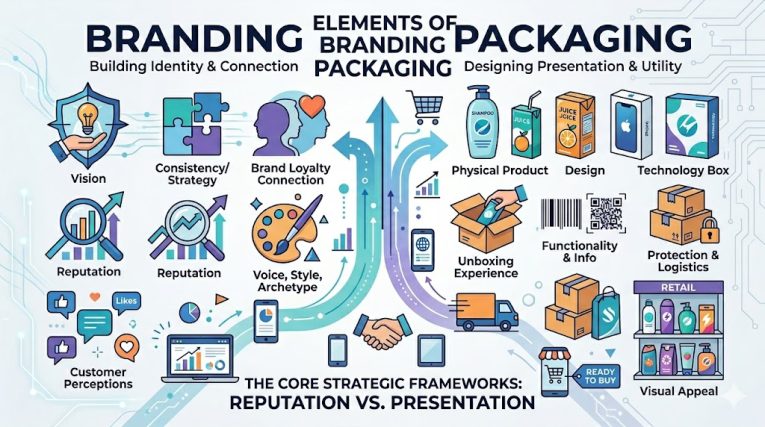
Many businesses fail to achieve rapid growth due to a lack of effective branding. Certain minor errors can undermine a brand’s identity and erode customer trust. Therefore, it is crucial to avoid these mistakes.
1. Lack of a Consistent Brand Identity
Using disparate colors, fonts, and designs can create confusion in the minds of customers. A brand’s identity must remain consistent across every platform.
2. Weak Brand Message
Customers should clearly understand what your brand stands for and what its unique value proposition is. An ambiguous message can weaken a brand’s image.
3. Neglecting Customer Experience
If a customer receives poor service or has a negative experience, it has a direct impact on the brand’s reputation. Excellent customer service is a vital component of strong branding.
4. Imitating Other Brands
Many businesses attempt to copy successful companies; however, unique and original branding is invariably more effective. It is a distinct identity that truly sets a brand apart.
Common Mistakes in Packaging
Effective packaging enhances the value of any product; however, certain common mistakes can tarnish the image of both the product and the brand. Therefore, businesses should avoid these errors.
1. Poor Design Quality
If the packaging design lacks visual appeal or the print quality is substandard, the product may appear cheap and unprofessional.
2. Overly Complex Packaging
Companies often over-design their packaging, making it difficult for consumers to understand. Simple and clean packaging is frequently more effective.
3. Failure to Display Brand Identity
Some companies fail to properly display their logo, brand name, or identity on their packaging. This makes it difficult for customers to remember the brand.
4. Use of Inappropriate Packaging Materials
Weak or poor-quality packaging materials can result in product damage during transit. Therefore, it is essential to utilize sturdy and secure packaging.
The Benefits of Strong Branding and Packaging
Businesses that prioritize effective branding and attractive packaging reap significant long-term benefits. This not only aids in attracting customers but also enhances the business’s identity and boosts sales.
1. Builds Customer Trust
Professional branding and high-quality packaging instill confidence in the minds of customers. People prefer to purchase from brands that appear trustworthy and professional.
2. Helps Boost Sales
Attractive packaging quickly captures customer attention and encourages them to purchase the product. This significantly increases the likelihood of higher sales.
3. Fosters Long-Term Customer Engagement
When customers have a positive experience with a brand, they are more inclined to make repeat purchases from that same brand. Strong branding plays a key role in cultivating customer loyalty.
4. Strengthens Online Presence
Effective branding facilitates superior performance across social media, websites, and SEO marketing efforts. This expands the brand’s online reach and enhances its digital identity.
5. Creates a Distinct Competitive Identity
Unique branding and creative packaging help a business stand out from its competitors. It is precisely this distinctiveness that draws customers toward your brand.
Conclusion
In today’s digital era, both branding and packaging are crucial for the success of any business. While branding helps establish a company’s identity, build trust, and foster strong relationships with customers, packaging presents the product in an attractive and professional manner.
Effective branding and packaging offer numerous benefits to a business, such as:
- Enhanced Brand Recognition
- Customer Trust
- Increased Sales
- Strong Customer Loyalty
- Improved Online Marketing Results
Successful companies consistently ensure that their branding and packaging are aligned with one another. When both elements work together seamlessly, the customer experience is enhanced, and the brand’s value appreciates.
If you wish to propel your business forward in the digital landscape, prioritizing strong branding and appealing packaging can prove to be immensely beneficial for you.
Leave a Comment