

- September 14, 2026
- Tejhaksh
- 0 Comments
- Digital Marketing, Marketing, Uncategorized
Zero-Click Marketing: What It Is, How It Works & Zero-Click Marketing Strategy
Digital marketing is changing rapidly. For many years, businesses focused heavily on getting users to click links, visit websites, and complete actions on landing pages. While website traffic is still important, the way people discover and consume information has changed significantly.
Today, users can find answers directly on Google, social media platforms, YouTube, AI-powered search tools, business listings, and other digital channels. In many cases, they get the information they need without visiting a website at all.
This change has created a growing opportunity for Zero-Click Marketing.
Zero-click marketing focuses on providing useful information and building brand visibility directly on the platforms where your audience is already searching or consuming content. The goal is not always to generate an immediate click. Instead, businesses can use these interactions to increase brand awareness, demonstrate expertise, build trust, and influence future purchasing decisions.
In this guide, we will explain What is Zero-click Marketing, how it works, the difference between Zero-click marketing vs. zero-click search, and practical ways to create an effective zero click marketing strategy.
What Is Zero-Click Marketing?
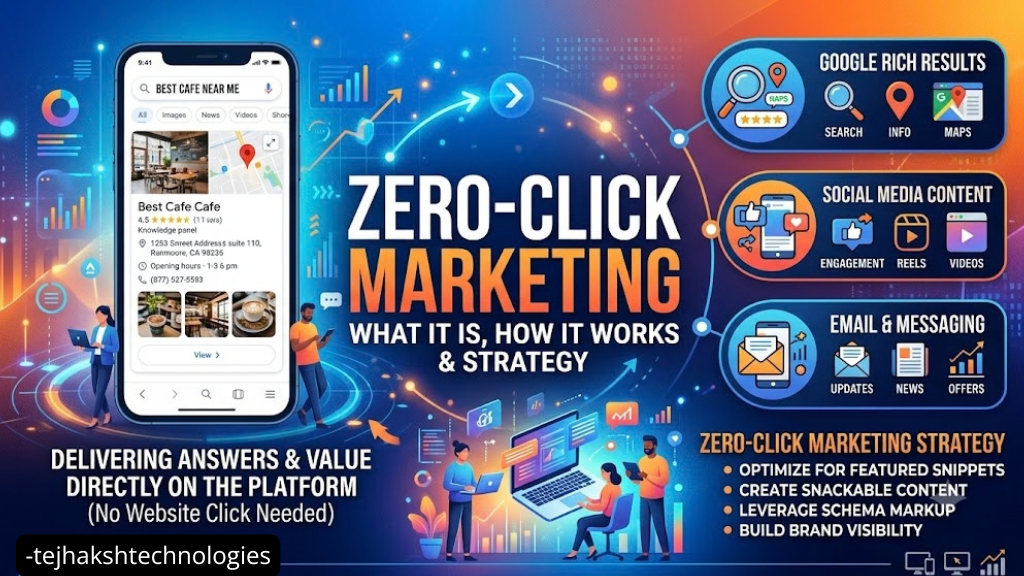
Zero-click marketing is a digital marketing strategy where brands provide useful information directly to their audience without requiring them to click a link or visit a website.
For example, when someone searches Google for “What is content marketing?”, they may get the answer directly in the search results. If your brand provides that answer, the user has already interacted with your brand without visiting your website.
Zero-click marketing can also happen through LinkedIn, Instagram, YouTube, Facebook, and Google Business Profile. Brands can share tips, answer questions, create videos, or provide useful business information directly on these platforms.
In simple terms, the goal is to be useful and visible where your audience is already looking for information—not just to generate clicks. This can help build brand awareness, credibility, and trust.
How Does Zero-Click Marketing Work?
The main idea behind zero-click marketing is simple: provide users with useful information directly on the platform where they are searching or consuming content.
In a traditional approach, users search for information, click on a website, and then look for the answer they need.
Traditional approach:
Search → Website → Information
With zero-click marketing, the brand provides the answer directly on the platform. Users can get useful information without needing to visit another website.
Zero-click approach:
Search → Direct Answer → Brand Visibility
This approach does not mean website traffic is unimportant. Instead, it encourages marketers to look beyond clicks and focus on brand visibility, impressions, engagement, mentions, and customer trust.
In simple terms, zero-click marketing is about being helpful and visible where your audience is already looking for information, rather than focusing only on getting them to click.
Examples of Zero-Click Marketing
Zero-click marketing can take many forms. The main idea is to provide useful information directly on the platform where your audience is searching or spending time.
Google Search Results
Google can show information directly in search results through featured snippets, knowledge panels, local results, and other search features.
When your content or business information appears in these results, users can discover your brand without visiting your website.
Social Media Content
Brands can share useful information directly on platforms like LinkedIn, Instagram, and Facebook.
For example, a marketing agency might post:
“5 Common SEO Mistakes Businesses Should Avoid”
If the post clearly explains all five mistakes, users get valuable information without needing to visit the agency’s website.
YouTube
YouTube is another effective channel for zero-click marketing. Businesses can create videos that answer common customer questions or explain useful topics.
Even if viewers do not visit the company’s website, they have already discovered the brand and interacted with its content.
Google Business Profile
Local businesses can provide important details through their Google Business Profile, including opening hours, location, services, reviews, photos, and contact information.
A customer may find everything they need directly in the profile without visiting the business website.
AI Search and Answer Platforms
AI-powered search is changing how people find information. Instead of visiting several websites, users often prefer quick, direct, and summarized answers.
This makes it important for brands to create accurate, helpful, and trustworthy content that can be found across search engines, social platforms, and AI-powered answer experiences.
What Is Zero-Click Search?
Zero-click search is a type of search where a user gets the answer directly on the search engine results page without clicking on any website.
For example, if someone searches “What is the capital of India?” and Google displays “New Delhi” directly in the search results, the user gets the required information without visiting another website.
This is known as a zero-click search because the user finds the answer without making a click.
Zero-click searches can also provide information such as definitions, calculations, weather updates, business details, quick facts, and answers to common questions directly in search results.
Zero-Click Marketing vs. Zero-Click Search
Zero-click marketing and zero-click search sound similar, but they are not the same. Zero-click search describes what happens during a search, while zero-click marketing is a broader strategy used by brands to reach their audience without depending on clicks.
Key Difference between Zero-Click Marketing and Zero-Click Search
The key differences can be understood through these points:
Zero-Click Marketing
- It is a marketing strategy.
- Focuses on brand visibility and providing value.
- Can happen across multiple platforms.
- Includes social media, YouTube, business profiles, AI platforms, and more.
- Helps build brand awareness, credibility, and trust.
Zero-Click Search
- It is a search behavior.
- Focuses on getting answers directly in search results.
- Mainly associated with search engines like Google.
- Usually happens within the search results page.
- Reduces the need for users to click on a website.
Why is Zero-Click Marketing Important?
Zero-click marketing is becoming more important because people do not always need to visit a website to discover or interact with a brand.
Today, users get information directly from Google search results, social media, YouTube videos, AI platforms, and other digital channels. This gives businesses new ways to reach their audience and build a strong online presence.
1. Builds Brand Awareness
People may see your brand several times before becoming a customer. Even when they do not click on your website, repeated exposure can make your brand more familiar and memorable.
2. Shows Your Expertise
Sharing useful and accurate information can demonstrate that your business understands its industry.
For example, a cybersecurity company that regularly shares tips about online security can build a reputation as a knowledgeable and trustworthy source.
3. Reaches Customers Earlier
People usually research a problem or product before making a purchase. Zero-click marketing helps businesses reach potential customers during this early research stage by providing useful information when they need it.
4. Expands Content Reach
Instead of sharing content only on your website, you can provide useful information across search engines, social media, YouTube, business profiles, and other platforms.
This gives people more opportunities to discover your brand.
5. Supports SEO
Zero-click marketing can also support your SEO strategy. Creating content that directly answers users’ questions can increase your chances of appearing in prominent search results and improve your overall online visibility.
In simple terms, zero-click marketing helps businesses stay visible, provide value, and build trust—even when users do not click on a website.
How to Do Zero-Click Marketing
Now that we understand zero-click marketing, let’s look at some simple ways to use it effectively. The goal is to provide useful information directly where your audience is searching or consuming content.
1. Understand Your Audience’s Questions
Start by finding out what questions your target audience is asking.
Think about:
- What problems do they have?
- What information are they looking for?
- What questions do customers ask your sales team?
- What do they search for before buying?
- What basic information do beginners need?
Create content that answers these questions clearly.
2. Give Direct Answers
Make it easy for people to find the information they need. If someone asks a simple question, provide a clear answer without unnecessary introduction.
Question: What is email marketing?
Weak approach:
“Email marketing has become an important part of the modern digital landscape…”
Better approach:
“Email marketing is a digital marketing method that uses email to communicate with customers, promote products, and build relationships.”
A clear and direct answer is more useful for both users and search engines.
3. Match Search Intent
Understand what users actually want when they search for something. Common types of search intent include:
- Informational
- Navigational
- Commercial
- Transactional
For example, someone searching “What is zero-click marketing?” is looking for information, not a sales pitch.
Create content that matches the user’s intent.
4. Create Answer-Focused Content
Build your content around the questions people are asking. Useful formats include:
- What is…?
- How does… work?
- Why is… important?
- What are the benefits of…?
- How to…?
- What is the difference between…?
This makes your content easier to read and helps search engines understand the topic.
5. Use Social Media to Provide Value
Do not use social media only to share website links. Create posts that provide useful information directly on the platform.
Instead of posting:
“Read our complete SEO guide. Click here.”
You could post:
“5 SEO mistakes that can hurt your website:”
Then explain all five mistakes in the post itself.
You can still add a website link when useful, but the post should provide value on its own.
6. Create Short-Form Videos
Short videos are a great way to use zero-click marketing. Try to answer one specific question in each video.
For example:
- What is technical SEO?
- How does Google Search work?
- What is keyword intent?
- How can businesses improve local SEO?
Give viewers a useful answer without requiring them to leave the platform.
7. Keep Your Business Information Updated
For local businesses, make sure your information is accurate and complete across important platforms such as business profiles and maps.
Include:
- Business name
- Address
- Phone number
- Opening hours
- Services
- Photos
- Reviews
- Frequently asked questions
Customers may use this information to decide whether to contact or visit your business without ever visiting your website.
In Simple Terms
Effective zero-click marketing is about answering questions, sharing useful content, and providing value directly on the platforms where your audience is already present.
Also read this:
Best CRM Software in 2026: Top 10 CRM Tools Compared
MongoDB for Beginners: Features, Advantages, Working, Use Cases & Environments (2026)
What Is Web Hosting? Everything You Need to Know (2026)
What is Hyperautomation? Complete Guide with Benefits, Use Cases, Challenges & Implementation
Zero-Click Marketing Strategy
A successful zero-click marketing strategy focuses on four key things: visibility, usefulness, consistency, and trust.
Here is a simple step-by-step framework businesses can follow.
Step 1: Find Important Questions
Start by finding the questions your target audience regularly asks. You can use customer conversations, Google search suggestions, forums, social media, and keyword research to find them.
Focus on questions that are closely related to your products or services.
Step 2: Create Clear and Useful Answers
Once you find the right questions, provide clear, accurate, and helpful answers.
Avoid long introductions and too much promotional content. The main goal should be to help the user first.
Step 3: Choose the Right Platform
Different audiences prefer different platforms. Choose the channels where your target audience is most active.
For example:
- Google: Search-focused answers
- YouTube: Tutorials and demonstrations
- LinkedIn: Professional insights
- Instagram: Visual and educational content
- Facebook: Community-focused content
- Business Profiles: Local business information
Step 4: Repurpose Your Content
You do not always need to create new content from scratch. One detailed piece of content can be turned into several zero-click marketing posts.
For example:
One blog post →
- 5 LinkedIn posts
- 3 Instagram carousels
- 2 short videos
- 1 YouTube video
Several FAQ answers
This helps you reach your audience across multiple platforms while saving time and effort.
Step 5: Measure More Than Website Traffic
Website traffic is useful, but it should not be your only measurement.
Track important metrics such as:
- Brand impressions
- Search visibility
- Engagement
- Video views
- Social mentions
- Branded searches
- Reviews
- Leads
- Conversions
- Direct traffic
The goal is to understand whether your overall brand visibility, engagement, and trust are growing, not just whether people are clicking on your website.
Zero-Click Marketing Best Practices
To make your zero-click marketing strategy more effective, keep these simple best practices in mind:
1. Focus on Value
Create content that answers questions, solves problems, and provides useful information. Always try to give your audience something valuable.
2. Keep Answers Clear
Use simple and easy-to-understand language. Avoid complicated words or lengthy explanations when a clear answer can explain the idea better.
3. Use Strong Headlines
Write headlines that clearly tell users what they will learn or gain from your content. A good headline can also improve visibility and engagement.
4. Be Consistent
Publish useful content regularly instead of relying on occasional campaigns. Consistency helps keep your brand visible and builds familiarity with your audience.
5. Build Authority
Use accurate information, original ideas, useful data, real examples, and expert knowledge whenever possible. High-quality content can help your brand become a trusted source.
6. Avoid Too Much Promotion
Do not make every post about selling something or asking users to click a link. Too much promotion can make your content feel less useful.
Provide value first and promote your brand naturally. Over time, helpful content can improve brand awareness, credibility, and trust.
Challenges of Zero-Click Marketing
Zero-click marketing has some challenges.
- Difficult to measure: Traditional analytics may not show the full impact of zero-click content because users may interact with your brand across different platforms before becoming customers.
- Platform changes: Search engines and social media can change their algorithms and features, which may affect your visibility.
- Platform dependency: Do not rely on a single platform. Combine zero-click marketing with your website, email list, and other owned channels.
In short, use zero-click marketing to build visibility while also developing channels you control.
Future of Zero-Click Marketing
The importance of zero-click marketing is likely to continue growing as search and content consumption evolve.
Users increasingly expect immediate answers and easy-to-consume information.
Search engines are becoming more answer-oriented, social media platforms are prioritizing native content, and AI-powered tools are changing how people discover information.
As a result, brands need to think beyond the traditional:
“How do I get more clicks?”
A better question is:
“How can I become useful and visible wherever my audience is looking?”
That shift is at the heart of zero-click marketing.
Businesses that consistently provide useful answers, demonstrate expertise, and maintain a strong presence across relevant platforms can create valuable brand interactions—even when users never click through to their website.
Conclusion
Zero-Click Marketing is an approach that focuses on delivering value and building brand visibility without making website clicks the only measure of success.
Understanding What is Zero-click Marketing is important because modern users can discover and consume information without visiting a website. This is different from zero-click search, which specifically describes searches where users get their answers directly from search results without clicking an organic result.
To succeed with zero-click marketing, businesses should create direct answers, understand search intent, publish useful social media content, create videos, optimize business information, and distribute content across relevant platforms.
The best zero click marketing strategy does not try to eliminate website traffic. Instead, it recognizes that a website visit is only one part of the customer journey.
The ultimate goal is simple: be useful, be visible, and build trust wherever your audience is searching for information.
Leave a Comment